
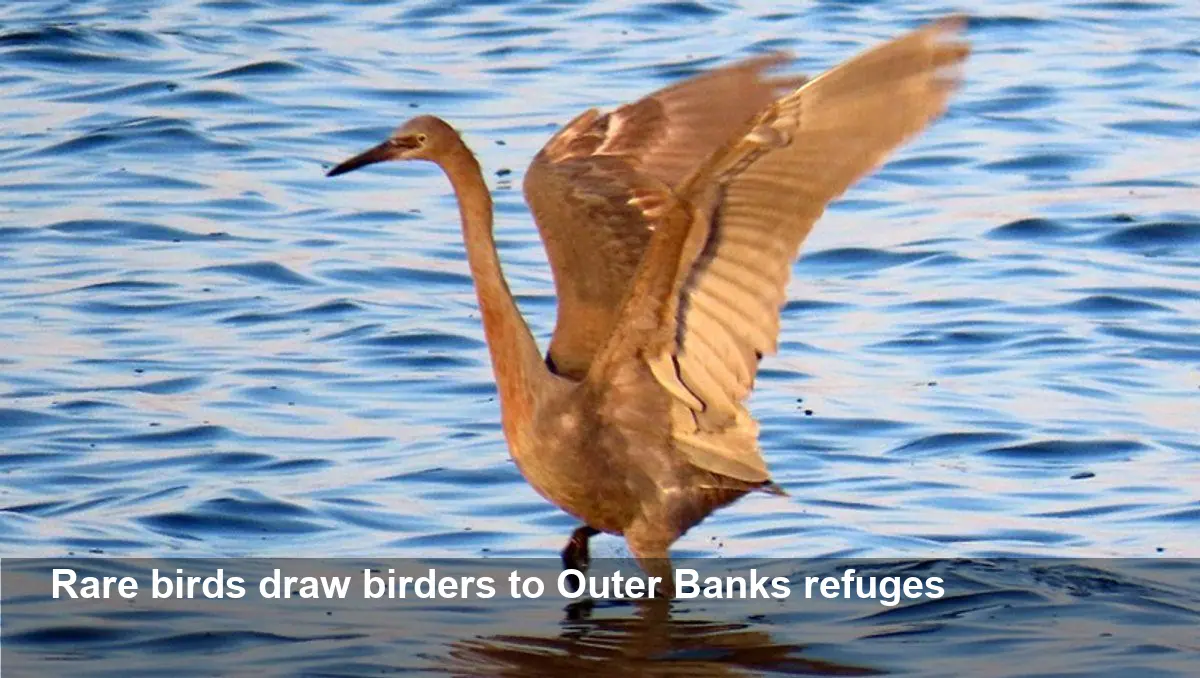
- USFWS refuges on the Outer Banks hosted rare winter visitors this season.
- An immature reddish egret was photographed at Pea Island National Wildlife Refuge.
- Alligator River Refuge recorded a Lincoln’s sparrow and a female painted bunting.
- Refuge managers urge visitors to watch for both regular migrants and occasional rarities.
Rare visitors turn heads at Outer Banks wildlife refuges
The U.S. Fish and Wildlife Service’s national refuges along Eastern North Carolina’s Outer Banks have long been reliable spots for wintering waterfowl and shorebirds. This season they also drew attention for a handful of unexpected, rarer arrivals that delighted birders and refuge staff.
Reddish egret appears at Pea Island
Birdwatchers spotted an immature reddish egret at the north pond of Pea Island National Wildlife Refuge. Reddish egrets are more typically found along the Gulf Coast and in Mexico, so seeing one on the Outer Banks is notable. Photographs taken by Karen Lebing and shared by the U.S. Fish and Wildlife Service captured the bird during its several-day stay.
Two rare songbirds at Alligator River
At nearby Alligator River National Wildlife Refuge, visitors recorded two other uncommon finds: a Lincoln’s sparrow and a female painted bunting. Both species usually overwinter farther west and south, often in the southwestern U.S. or Mexico, making their presence in Eastern North Carolina unusual.
What this means for birders
These sightings underline the value of local refuges for both expected migrants and surprising vagrants. The Outer Banks sit along a key migration corridor, and changing weather patterns or storm-driven movements can push birds off their typical routes. When rare birds show up, they often stay for several days — giving enthusiasts time to observe and document them.
“When you visit our Refuges, keep an eye out for both the regular and rare birds that visit,” the U.S. Fish and Wildlife Service advised. Visitors should follow refuge rules, keep a respectful distance, and avoid disturbing feeding or resting birds.
Tips for spotting rarities
- Check refuge updates and local birding lists before you go.
- Bring binoculars and a field guide or birding app to confirm identifications.
- Follow posted trails and viewing areas to minimize habitat disturbance.
Whether you’re a seasoned birder or a curious visitor, the Outer Banks refuges continue to offer memorable wildlife encounters — from the expected flocks of winter waterfowl to the surprise appearances that make birding here particularly exciting.
Image Referance: https://www.thecoastlandtimes.com/news/rare-birds-on-the-outer-banks-refuges-9e76b4fe/