
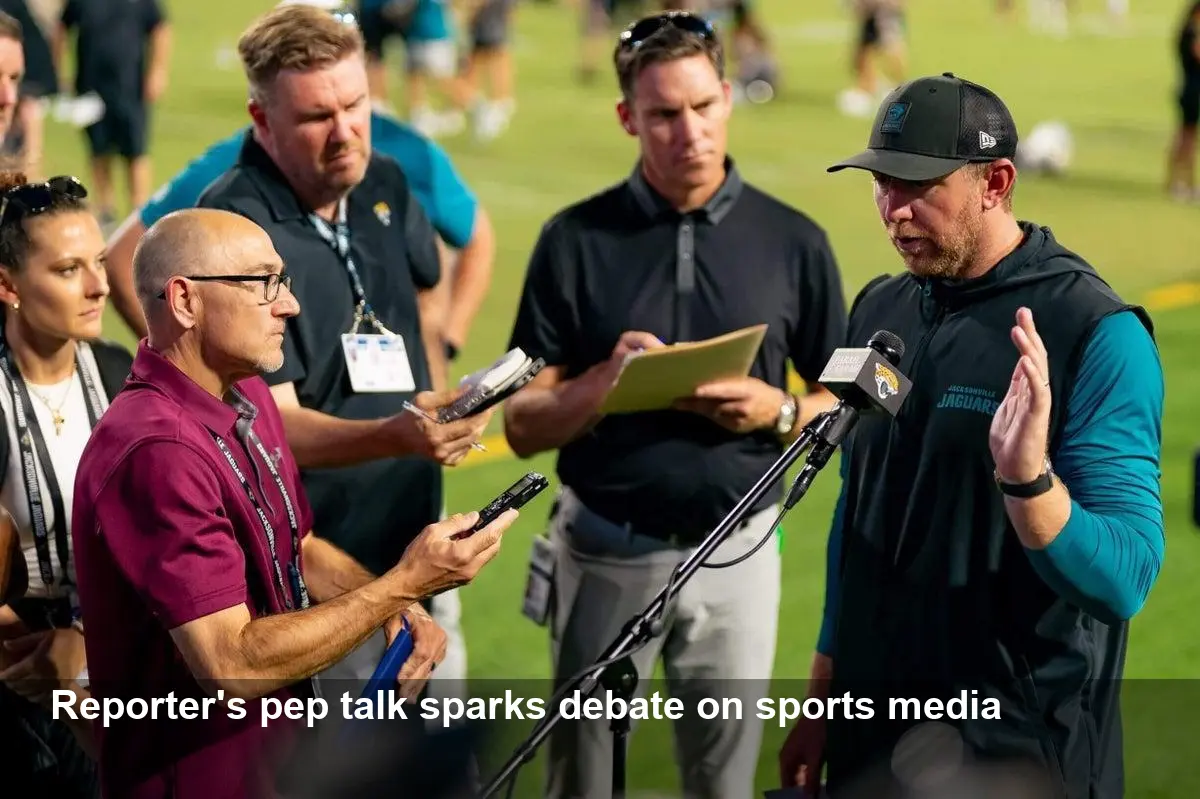
- Lynn Jones gave Jaguars coach Liam Coen a brief postgame pep talk that went viral after an Adam Schefter repost.
- Sports reporters debated whether offering comfort crosses journalistic boundaries; Jemele Hill offered a measured response.
- The episode highlighted tensions between access-driven team media, independent reporting and the human side of journalism.
What happened
After the Jacksonville Jaguars’ narrow loss to the Buffalo Bills, longtime local reporter Lynn Jones stepped to the mic and offered coach Liam Coen a short, emotional pep talk instead of asking a question. The exchange lasted roughly 20 seconds and ended when Jones gave up the mic.
National attention followed when ESPN insider Adam Schefter reshared the clip on X, amplifying the moment to millions of followers and triggering a wider conversation about journalistic norms.
Social posts that fanned the flames
Adam Schefter reposted the exchange on X: https://x.com/AdamSchefter/status/2010478173155438897?s=20
Journalist Jemele Hill responded on X with a nuanced take — sympathetic to Jones’ humanity but noting that such moments are not typical practice for reporters covering postgame news conferences.
Jemele Hill’s response: https://x.com/jemelehill/status/2010550294002982985?s=20
Why reporters pushed back
Many sports writers and commentators quickly criticized Jones’ decision, arguing that reporters should remain impartial observers who prioritize asking questions over offering consolation. Some replies were sharp; others attempted to calmly explain newsroom norms.
The backlash reflected broader anxieties in journalism: shrinking newsrooms, rising team-owned content that favors fandom over scrutiny, and pressure from social platforms that reward viral moments over context.
The role of access and trust
Traditional beat reporters have daily access to teams and are expected to balance close relationships with professional distance. That distance helps preserve credibility and ensures the public receives critical, independent coverage. When reporters display obvious rooting interests, it invites questions about bias and the quality of reporting.
The human side of the story
Equally important is that reporters are people. They encounter emotional moments in locker rooms and press rooms. Some argue that brief human gestures — a short pep talk, a word of comfort — are defensible in context and do not automatically erase a reporter’s professional responsibilities.
What this episode reveals
The Coen-Jones moment became a flashpoint because it exposed tensions between humanity and professional norms inside a fast-changing media ecosystem. Critics say standards matter; defenders point out the interchange’s brevity and local context — Jones is part of a community paper that serves Jacksonville’s Black community and has long covered the team.
Bottom line
Small moments like this will continue to spark debate. But they also remind readers why journalism matters: to hold power accountable, to tell community stories, and to negotiate the line between empathy and objectivity. The discussion around Lynn Jones, Liam Coen and responses from voices like Jemele Hill highlights the job’s fragility — and why many reporters believe it remains worth defending.
Image Referance: https://www.nytimes.com/athletic/6966462/2026/01/14/liam-coen-lynn-jones-backlash-journalism/