
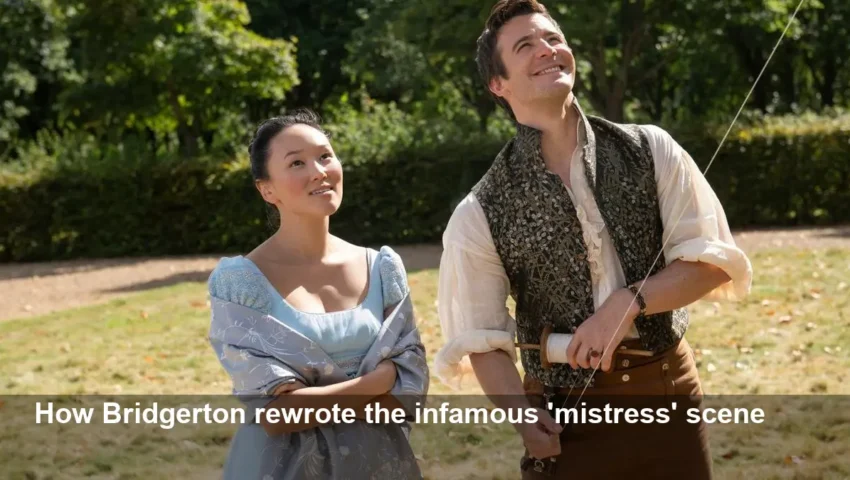
- Benedict’s proposal to Sophie is softened on screen: the series removes his blackmail and delays the indecent offer.
- The show reframes Benedict as conflicted rather than coercive, giving Sophie greater agency than in the novel.
- Wider series context — including references to Anthony’s past mistress — helps explain the proposal as a social pressure point, not a first impulse.
How the TV version alters the book
Bridgerton season four adapts Julia Quinn’s An Offer From a Gentleman while changing one of its most controversial beats: Benedict’s offer that Sophie become his mistress. The novel includes a coercive edge — Benedict blackmails Sophie into accepting a role that mirrors her mother’s fate. The Netflix series strips out the blackmail and delays the indecent proposal, reframing the moment as a fraught last resort rather than a first instinct.
From coercion to conflict
On page, Benedict’s behavior reads as manipulative: an offer of kept status, followed by threats if Sophie refuses. On screen, Benedict (Luke Thompson) apologizes for an impulsive kiss and helps Sophie (Yerin Ha) find work without ever initially naming her a mistress. The show emphasizes his internal turmoil and attraction, so viewers meet a Benedict shaped by emotional conflict rather than calculated control.
Why that change matters
The alteration matters for modern viewers evaluating power dynamics. In the Regency setting, keeping a mistress was common among men of a certain class. The series acknowledges that reality while avoiding glamorizing an exploitative exchange. Sophie gets more agency in her choices, and the narrative emphasizes consequences and discomfort when the idea is raised.
Context from the Bridgerton world — and Jonathan Bailey
The show also uses its ensemble history to contextualize the offer. Anthony Bridgerton, played by Jonathan Bailey, is explicitly referenced as having had a mistress (Siena) in season one. Dialogue in season four — from friends at a tavern to casual remarks about mistresses — frames the idea as a social norm many men accepted, which informs Benedict’s thinking. That context helps the TV adaptation position Benedict’s proposal as a product of period expectation, not an unexamined power play.
Key scene to watch
The mid-season one scene where Benedict and Sophie finally yield to desire ends with Benedict asking Sophie to be his mistress — a moment that still lands painfully. The show’s version cuts the coercion and increases Sophie’s emotional clarity: she recoils because the offer revives her deeper fears, not because she was tricked. That change clears a more believable path toward a later reconciliation.
Embedded music from the episode
Their late-night tryst plays against an orchestral cover of Olivia Rodrigo’s “bad idea right?” — used to heighten the emotional tension. Watch the original track below:
Overall, Bridgerton season four keeps the core Cinderella-style romance while making careful changes that reduce coercion and increase Sophie’s agency. The result: a storyline that acknowledges historical realities but centers consent and emotional complexity for modern audiences.
Image Referance: https://www.vanityfair.com/hollywood/story/bridgerton-season-four-benedict-sophie-mistress-storyline