
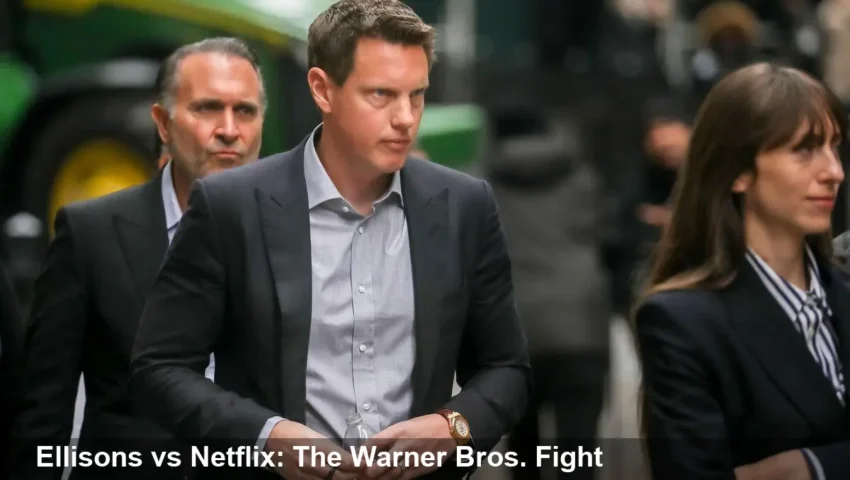
- Netflix has an all-cash, board-approved $27.75/share deal for Warner Bros.; shareholders will vote soon.
- Paramount Skydance, backed by Larry and David Ellison, has not ruled out upping its offer.
- Regulatory reviews in the US and Europe could still alter or block the Netflix transaction.
- Even if Netflix wins the vote, divestitures or concessions remain possible.
Netflix’s all-cash offer leads, but fight isn’t finished
Netflix reached an agreement to buy Warner Bros. Discovery’s studio and streaming business for $27.75 a share in an all-cash deal that Warner Bros.′ board has unanimously approved. A shareholder vote is expected in the coming months, and unless investors reject the proposal — a long shot — Netflix is the current winner.
Paramount’s counterplay: more cash or regulatory risks
Paramount Skydance, led by David Ellison and backed by billionaire Larry Ellison, has pursued a competing bid and generated significant noise around the sale. Paramount has not increased its offer yet, but executives say their current proposal isn’t final. The most straightforward way for Paramount to reclaim momentum would be to raise its bid.
Alternatively, Paramount could lean on regulatory scrutiny. Politicians and antitrust officials in the US and Europe have already flagged competition concerns about Netflix owning Warner Bros. studios and HBO. Paramount may try to persuade shareholders to vote against the Netflix deal by arguing regulators will force heavy divestitures or block the merger entirely.
Why Larry and David Ellison are motivated
David Ellison bought Paramount knowing the company needed scale. Warner Bros. would instantly provide that scale: a deep content library, studios, and HBO’s streaming muscle. Larry Ellison’s backing gives Paramount financial heft far beyond its market cap, turning a $13 billion company into a credible challenger against a $364 billion Netflix.
Legal maneuvering and shareholder tactics
Paramount filed a narrow lawsuit seeking more detail on Warner Bros. valuations, especially around cable networks, to bolster its case that its offer is superior. Warner Bros. responded with additional disclosures. Legal experts call the suit low-stakes; winning it wouldn’t automatically hand Warner Bros. to Paramount.
Paramount has also threatened to nominate directors to the Warner Bros. board, but timing makes that approach difficult: the shareholder meeting to elect directors likely comes after the vote on Netflix’s offer.
What’s at stake for Hollywood and streaming
Who owns Warner Bros. matters. The studio and HBO shaped decades of film and TV culture. If regulators impose divestitures, Netflix might have to sell assets in select territories — possibly HBO in some markets — but global divestiture of the library appears unlikely.
Industry consequences extend to theatrical windows, videogames and labor. Netflix has promised a 45-day theatrical window for big releases, at least initially, and Warner Bros.′ gaming arm and guild negotiations all face uncertainty while the sale is unresolved.
Bottom line
Netflix’s board-approved, all-cash deal currently leads, but the presence of Larry Ellison’s capital and pending regulatory reviews mean this chapter could still change. Paramount can still raise its offer or press antitrust arguments — and shareholders and regulators hold the final cards.
Image Referance: https://www.bloomberg.com/news/newsletters/2026-01-25/the-warner-bros-bidding-war-is-over