
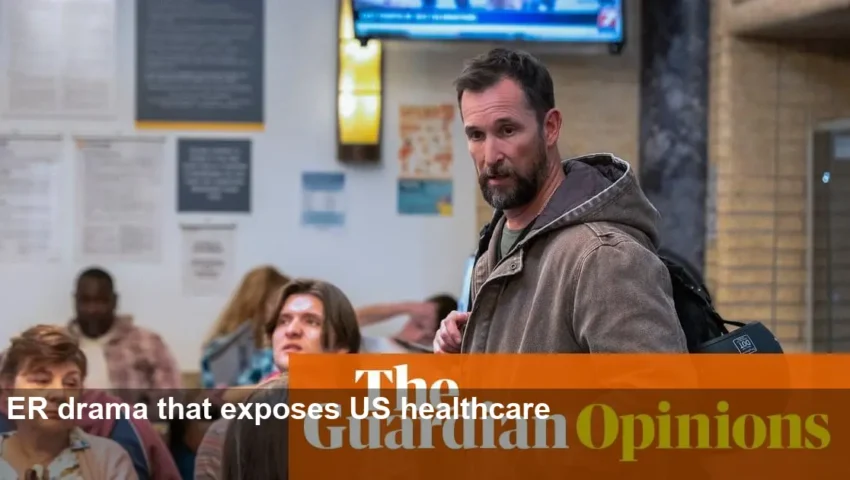
- The Pitt season 2 returns, continuing to dramatize failures and tensions in US healthcare.
- The show balances medical realism with human stories across doctors, nurses and support staff.
- Key season themes: insurance barriers, adoption of generative AI and the strain on safety‑net hospitals.
Season 2: realism, pressure and urgency
The Pitt’s second season premiered this month and keeps the series focused on the bracing, often brutal realities of American emergency care. Noah Wyle returns as Dr Michael “Robby” Robinavitch, the show’s moral center, while Sepideh Moafi’s Dr Baran Al‑Hashimi brings tech‑forward ideas like “patient passports” into the GPT‑era ED.
A show that foregrounds everyday healthcare work
Unlike many medical dramas, The Pitt spends time on the small, routine tasks that define emergency medicine: documentation, social‑work navigation, nursing triage and the logistics that keep a trauma centre running. Those details give the series credibility and emotional weight — from draining an alcoholic patient’s distended abdomen to confronting violence against staff.
Insurance and inequality on screen
Season two sharpens the show’s systemic critique. Nurse Noelle Hastings (Meta Golding) personifies the struggle to place patients with limited or out‑of‑network coverage. The series makes clear that in the US, access often depends on insurance status — a reality outside the drama that contributes to hospital financial strain and closures.
AI in healthcare: promise and peril
Producers weave generative AI into the plot through Dr Al‑Hashimi, who champions transcription and ambient tools to reduce clinician burnout. The show treats AI as both a potential relief from “charting” and a managerial lever that could increase throughput at the expense of care quality — a debate playing out in real hospitals today.
Why The Pitt resonates
The Pitt’s combination of graphic medical detail and softer human moments gives viewers a “passport” into a healthcare system that is complex and often hidden. The series does not attempt to solve policy questions on screen, but it surfaces the lived consequences of those policies — long waits, financial shocks for patients and the emotional toll on staff.
Further reading and sources
For readers who want context beyond the show: the American Hospital Association documents rising workplace violence (AHA: Costs of Violence). Clinical research on health disparities is available via JAMA (JAMA Internal Medicine). Reporting on wealth and longevity investments appears in the Wall Street Journal (WSJ).
The Pitt season 2 remains a rare network of spectacle and specificity: it entertains while prompting viewers to think about how a for‑profit system shapes who receives care and at what cost.
Image Referance: https://www.theguardian.com/tv-and-radio/2026/jan/16/the-pitt-season-2-us-healthcare