
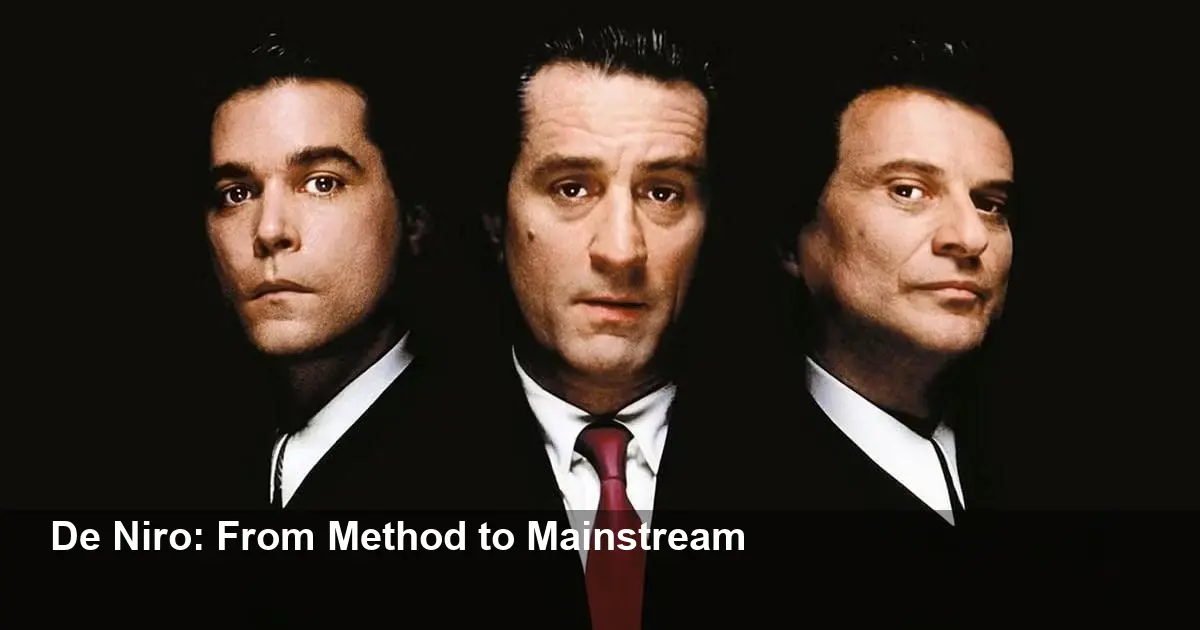
- Robert De Niro rose from gritty early roles to global fame through collaborations with Martin Scorsese.
- His intense method work—Taxi Driver, Raging Bull—set a benchmark for acting, often at great physical cost.
- A later shift into broader comedies and commercial projects diluted his image for some fans.
- When paired with bold directors, De Niro still delivers quietly devastating performances.
Early years: learning to disappear
Born in New York in 1943, Robert De Niro fought his way up from small, raw performances in independent and counterculture films. Those early parts were less about star power and more about training—exposing an actor’s rawness and teaching him how to vanish into a role.
The Scorsese effect
De Niro’s collaborations with Martin Scorsese transformed his career. Films like Mean Streets and later Taxi Driver and Raging Bull created a new acting language: total immersion. De Niro didn’t simply play characters—he inhabited them, often changing his lifestyle and body to serve the role.
Method extremes and iconic highs
To become Travis Bickle, De Niro drove a taxi for months, read about mental illness, and stayed in an abrasive, sleepless mindset. For Raging Bull he trained as a boxer, fought real matches, and drastically altered his body, winning Academy recognition. Those physical and psychological extremes produced performances that remain benchmarks in film acting.
Shift to comedy and mainstream roles
In the 1990s and 2000s De Niro embraced comedy and mainstream hits—Analyze This, Meet the Parents, and lighter fare that leaned on his persona. Studios rewarded the contrast between his tough-guy image and comedic timing, but the steady stream of broad roles led some viewers to feel his work had been diluted.
The comeback when challenged
Even during stretches of uneven choices, De Niro never entirely lost his craft. Strong directors and serious material brought the old intensity back. Recent turns—quiet, chilling villains or reflective roles in prestige films—remind audiences why he remains one of the most formidable actors of his generation.
Final verdict: drift, not decline
So what happened to Robert De Niro? He didn’t fall so much as drift. Years of studio comedies and commercial projects softened the edge that made him legendary. But when a director challenges him, De Niro still locks in—the pause, the stare, the calculation return. He may not repeat the physical extremes of his youth, but his ability to unsettle and command attention remains intact.
In short: robert de niro’s career is a study in peaks and plateaus. The craft hasn’t vanished—only the conditions that produced his greatest work need to be in place for it to reappear.
Image Referance: https://www.joblo.com/what-happened-to-robert-de-niro/